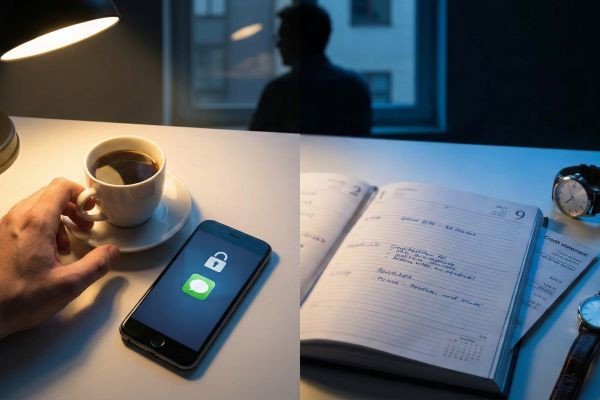
1. The Smartphone Fortress: Sudden Digital Defensiveness
In the modern dating landscape, a smartphone is often the primary gateway to a secret life. While everyone is entitled to digital privacy in a relationship, there is a distinct difference between normal boundaries and active secrecy.
If your partner is engaging in infidelity, their relationship with their digital devices will almost certainly change.
Key indicators to watch for:
The Device Never Leaves Their Sight: They take their phone everywhere, including into the bathroom or the shower, whereas they used to leave it on the kitchen counter.
Changed Passwords and Notifications: They suddenly change their phone or computer passcodes without a clear reason. You might also notice that push notifications are disabled or hidden from the lock screen so that incoming messages cannot be read at a glance.
The Face-Down Habit: Every time they set their phone down, it is placed screen-side down.
Panicked Reactions: If you innocently pick up their phone to check the time or look for a photo, they react with sudden panic, anger, or urgency to get the device back.
Important Note: A sudden lock on a phone doesn’t automatically mean an affair—they could be planning a surprise or dealing with a private work issue. But paired with other signs, it is a significant red flag.
2. The Shift in Intimacy: Emotional and Physical Distance
Intimacy is the glue that holds a romantic partnership together. When a partner’s emotional or physical energy is being directed toward someone else, you will almost inevitably feel the withdrawal in your own relationship.
Interestingly, this shift doesn't always manifest as a complete freeze-out; sometimes, it swings in the complete opposite direction.
How intimacy shifts during infidelity:
Emotional Unavailability: They no longer ask about your day with genuine curiosity. Deep, meaningful conversations are replaced by shallow, transactional exchanges about household chores or logistics.
The Physical Drought: Your sex life plummets, and they consistently use vague excuses like stress or fatigue to avoid physical contact, including simple affection like hugging or holding hands.
The Sudden Surge: Conversely, some cheating partners experience a sudden, uncharacteristic spike in their libido. This can be fueled by the adrenaline of an affair, or it can be a subconscious attempt to cover their tracks and prevent you from becoming suspicious. You might also notice them introducing entirely new physical techniques out of the blue.
3. Altered Schedules and Vague Excuses
Affairs require two things to survive: time and opportunity. If your partner is cheating, they have to carve out time from their existing life to facilitate the deception. This usually results in a drastic and unexplained alteration to their daily routine.
What to look out for:
The "Working Late" Alibi: While demanding jobs exist, a sudden, unexplained need to consistently work late, go on spontaneous weekend business trips, or attend mysterious "networking events" is a classic warning sign.
Unreachable Periods: There are specific blocks of time during the day or evening when they are completely unreachable. Their phone goes straight to voicemail, or they take hours to respond to a simple text, later claiming their battery died or they had no signal.
New, Solo Hobbies: They suddenly develop a passion for a new hobby that requires them to be away from the house for hours at a time, but they actively discourage you from joining them or showing interest in it.
4. Following the Paper Trail: Financial Discrepancies
Maintaining a secret relationship is rarely free. Whether it is paying for hotel rooms, dinners, gifts, or a separate burner phone, an affair leaves an economic footprint. If you share finances or have a general awareness of your partner's spending habits, sudden changes in this area can be highly revealing.
Financial red flags include:
Cash Withdrawals: A sudden increase in ATM withdrawals. Cash is untraceable and is the preferred method for someone trying to hide dinners or hotel stays from a joint bank statement.
Hidden Accounts or Cards: You stumble upon a credit card bill or a bank statement for an account you knew nothing about.
Defensiveness Over Money: If you ask a simple question about a budget discrepancy or a large, unexplained charge, they become incredibly hostile, accusing you of trying to control them or tracking their every move.
5. Hyper-Defensiveness and Gaslighting
Perhaps the most psychologically damaging sign of infidelity is how the cheating partner manipulates the narrative to protect themselves. When someone is harboring a massive secret, they live in a state of hyper-vigilance. Because they know they are doing something wrong, they anticipate accusations at every turn.
The behavioral psychology of a cheater:
Turning the Tables: If you ask a simple, innocent question like, "How was your evening out?" they might explode, responding with, "Why are you interrogating me? Don't you trust me?"
Projecting Guilt: Unconscious guilt often leads to projection. A cheating partner might suddenly start accusing you of flirting with others or being unfaithful, effectively transferring their own guilt onto your shoulders.
Gaslighting: They manipulate you into doubting your own reality. If you point out an inconsistency in their story, they will insist you misremembered, call you "crazy," or claim you are just being paranoid. This is a deliberate tactic to destabilize your confidence in your own intuition.
Moving Forward: What to Do Next
Discovering that your partner might be cheating is deeply unsettling, but it is vital to handle the situation with emotional intelligence rather than impulsive reactivity.
Do not engage in illegal snooping. While the temptation to hack their accounts is strong, this violates boundaries and can backfire legally and emotionally.
Document your findings. Keep a private log of the inconsistencies, schedule changes, and financial discrepancies. This will help you stay grounded if your partner attempts to gaslight you.
Initiate an open conversation. Use "I" statements to express your feelings without immediate aggressive accusations. Say, "I have been feeling a lot of distance between us lately, and I noticed some changes in your routine that are making me anxious. Can we talk about this?"
Whether your suspicions are confirmed or are the result of a severe miscommunication, navigating this territory often requires outside help. Seeking the guidance of a licensed couples counselor or an individual therapist can provide you with the tools to either heal the relationship or safely transition out of it.